


ep.6 HAzel
20 December, 2024

Before the dinner•••
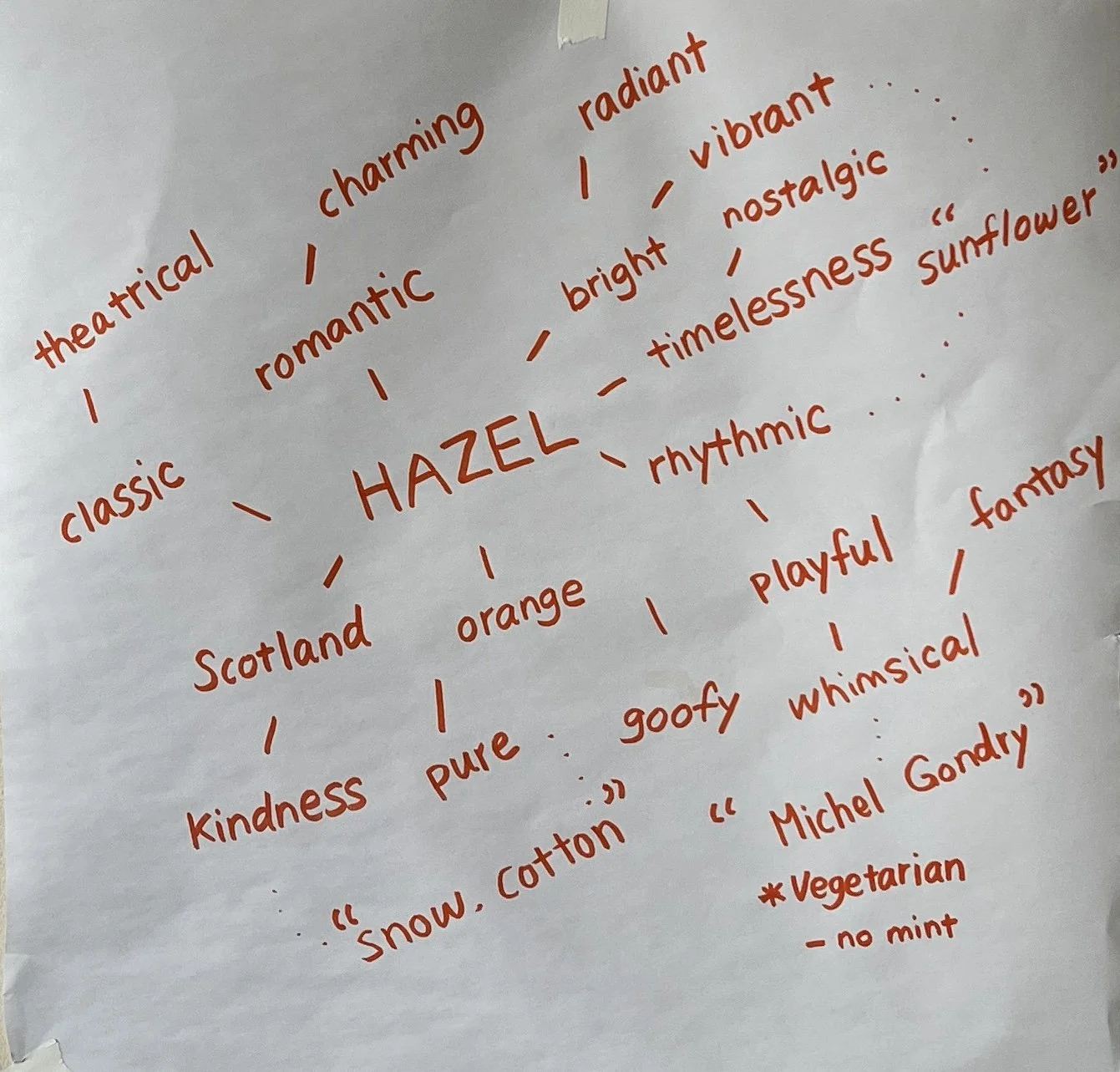
When I first began mapping out Hazel’s keyword map, words to describe her came flooding into my mind. That, I realized, was proof of just how distinct and memorable her character truly is.
For anyone who knows Hazel—even people meeting her for the first time—it’s impossible to miss the incredible kind energy she radiates.
Whenever I see her, there’s a brightness about her that feels instantly uplifting. But then, layered onto that glow, there’s this delightful, goofy twist. It’s as though a charming stage character has suddenly stepped out of a play and into real life. Abstract as it may sound, being around her feels like watching playful musical notes dance in the air—completely rhythmic and alive.
That’s when I landed on the perfect word: Whimsical.
It captures everything about Hazel’s presence—the romantic aura, the slightly quirky charm, and the almost surreal quality of someone who seems to have leapt out of a storybook or play.
So when it came to planning Hazel’s supper club menu, I approached it as though I were designing props for a stage. The form of the dishes came to me first: I wanted the ingredients, shapes, and final presentation to feel joyful and playful, just like her.
For the first dish, I wanted to create something that mirrored Hazel’s sunflower-like warmth. That led me to think of Gimbap. With its colorful cross-sections, I realized it would be possible to arrange the ingredients into a floral pattern.
Next came enoki mushrooms. Their tall, slender, and almost comically cute shape reminded me so much of Hazel herself that I couldn’t resist. I decided to transform them into a vegetarian Gangjeong (crispy glazed fritters).
Finally, I wanted a dish to pair with Gimbap and Gangjeong—something comforting and warming for a chilly winter evening. That’s when udon noodles came to mind, with their soft, bouncy shapes that felt just right for the theme. I made a kimchi udon soup, using kimchi-based broth as its foundation.
And just like that, Hazel’s whimsical character translated into three dishes—playful, heartfelt, and full of charm.
•
•
•
Eat & Drink•••

sunflower-shaped Gimbap
Korean rice rolls shaped like a sunflower
kimchi udon
thick wheat noodles in a spicy kimchi broth
Enoki mushrooms gangjeong
crispy fried enoki mushrooms in sweet soy sauce
Caruso & minini Bibbo zibibbo 2023
Sicily, Italy


Talk•••

The star of the evening, Hazel, arrived.
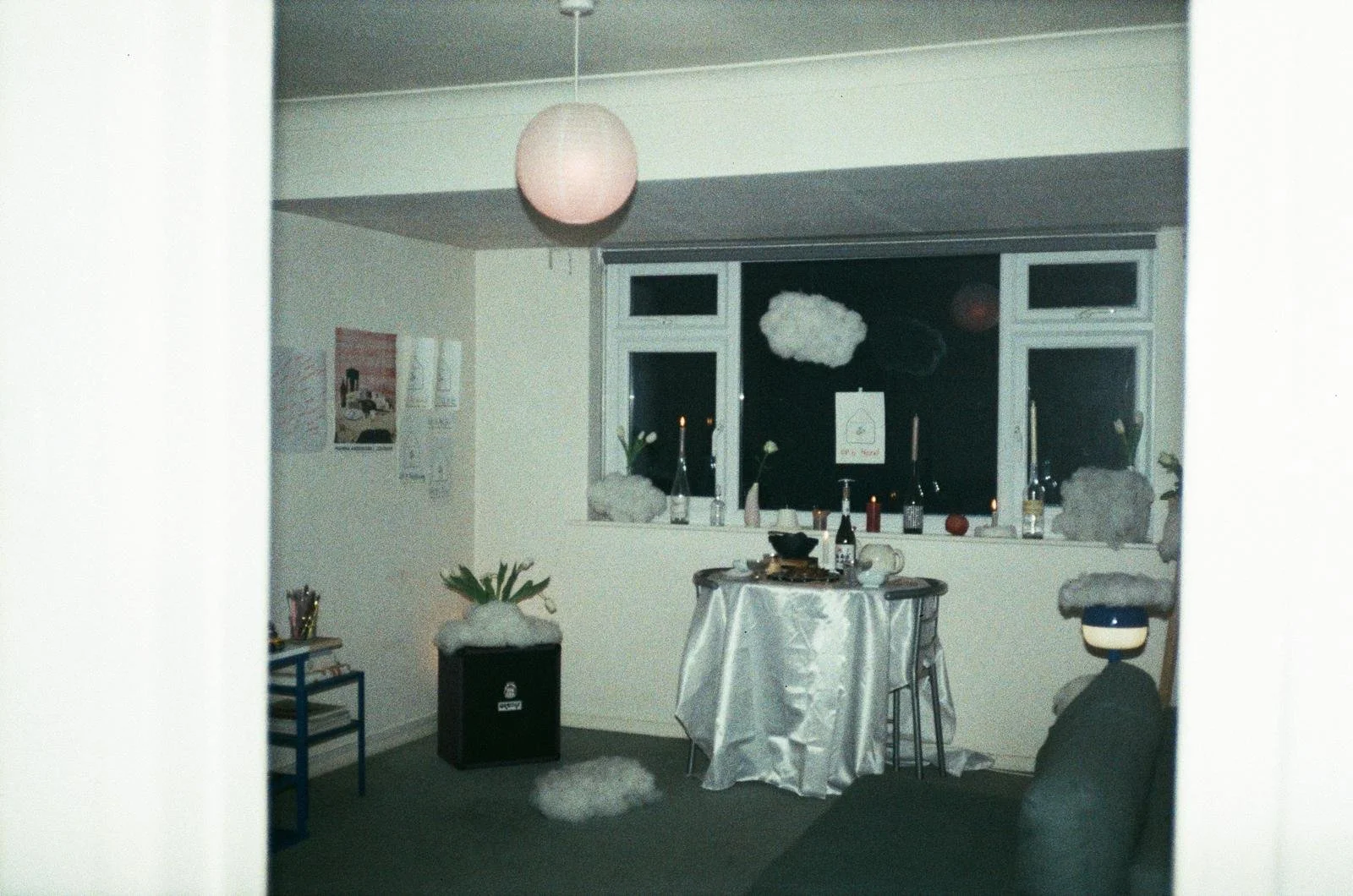
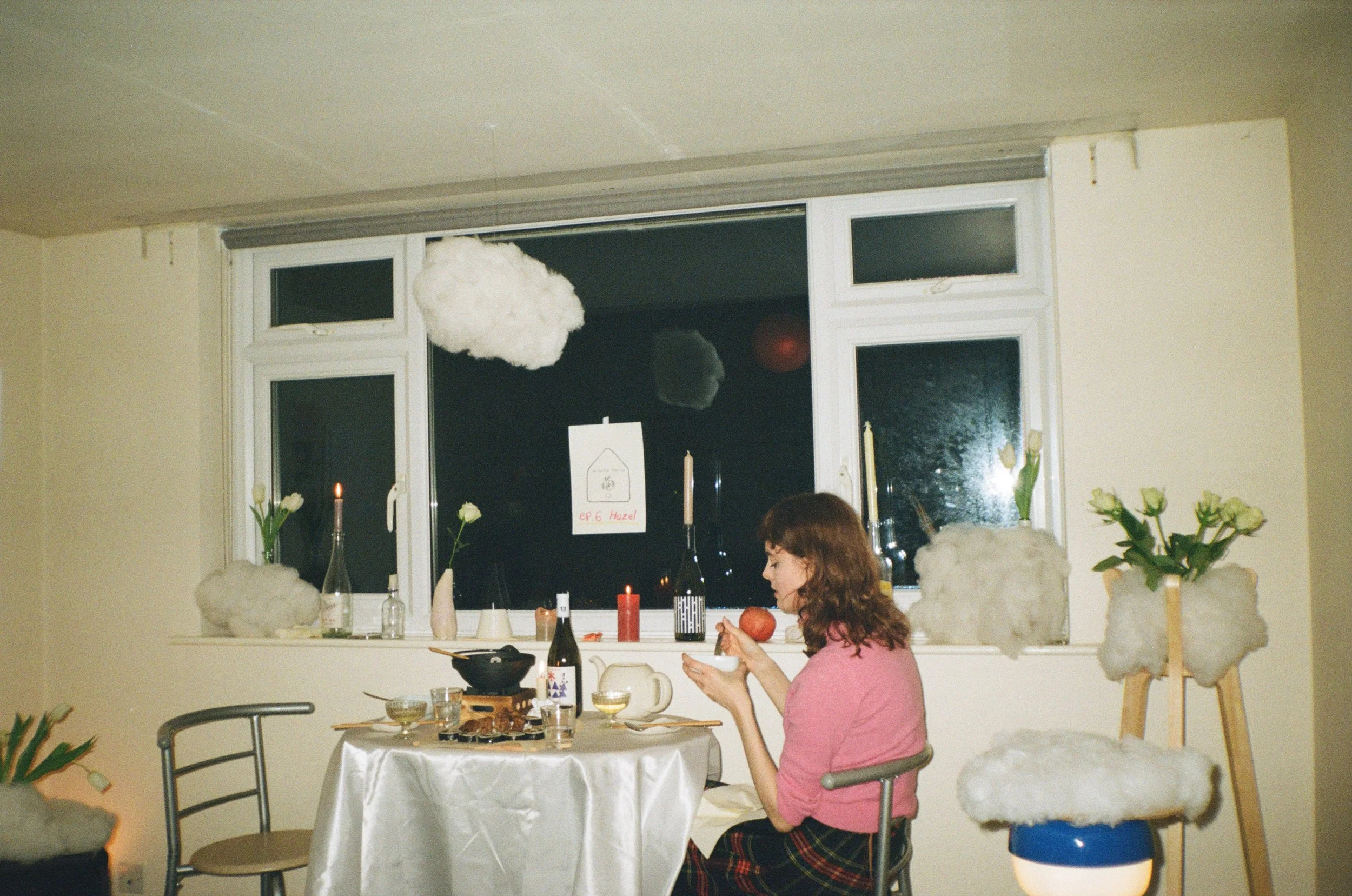
The moment she stepped into the stage I’d prepared for her, her face lit up with a playful expression—so perfectly her.
As we settled in, we started talking about the story behind the setup. While I was searching for a word that best described Hazel, I landed on Whimsical, and it immediately brought to mind a film I had seen years ago—Michel Gondry’s The Science of Sleep.

Released in 2006, The Science of Sleep is a surreal romantic drama that blurs the line between fantasy and reality. The film is known for its handmade animations, dreamlike visuals, and imaginative, childlike charm—all of which perfectly mirrored the feeling I wanted to capture for Hazel.

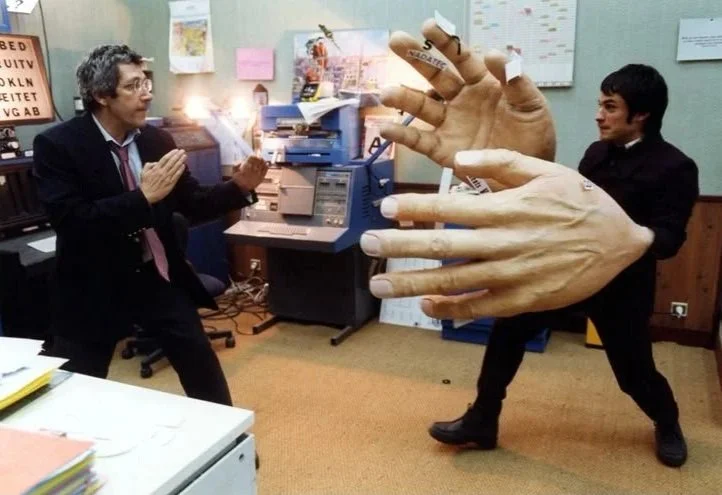
So, I decided to create a space inspired by that world—one that makes you wonder whether you’re standing in reality or inside a dream. I told Hazel how I used cotton and discarded boxes to build the scene, transforming simple materials into something playful and slightly surreal.
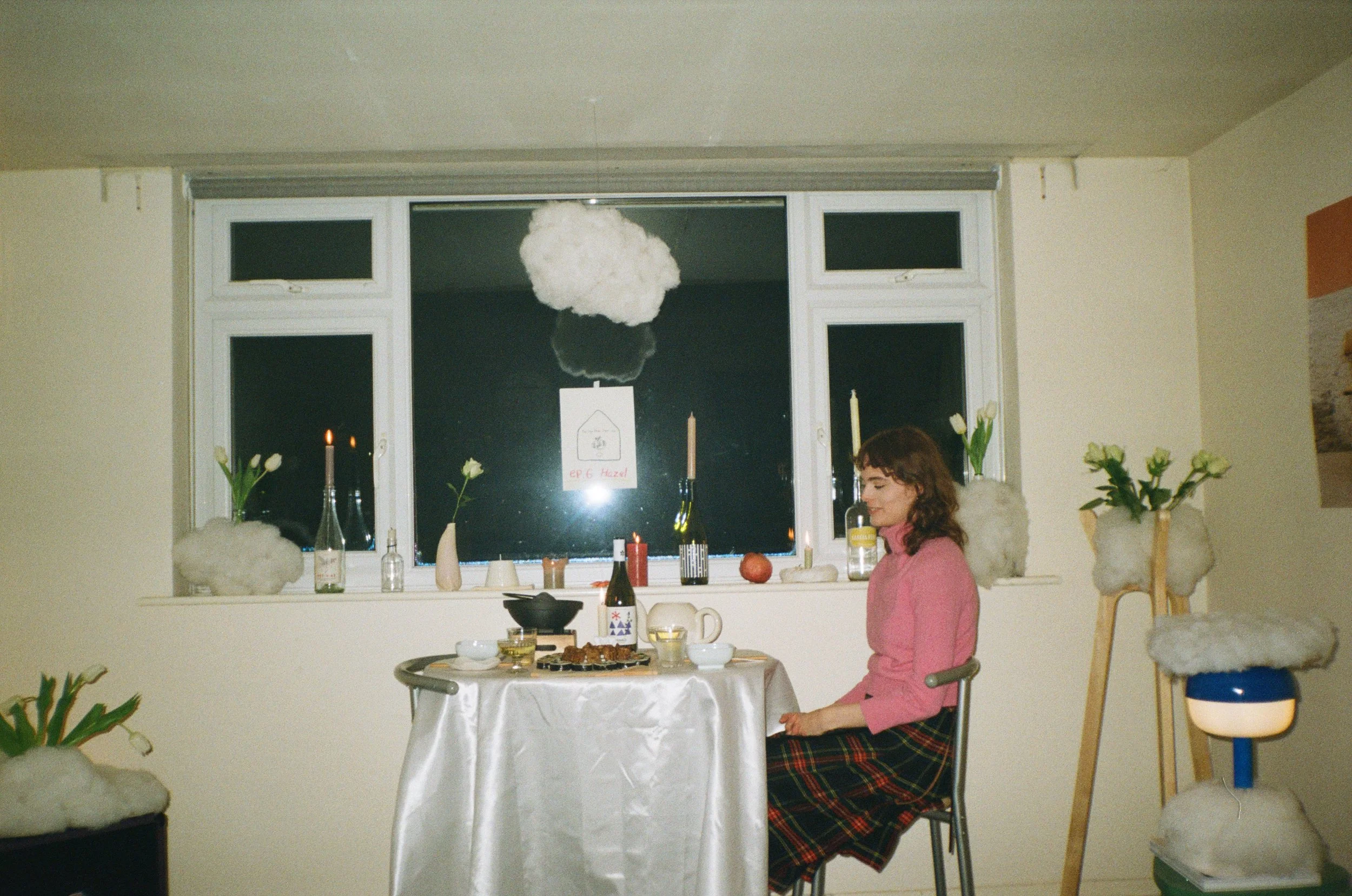
She looked around, smiling wide. “It’s insane,” she said. “Feels like I’m on a different planet.”
While we were chatting, I suddenly noticed the bowl of kimchi udon sitting untouched between us.
“Oh no, it’s getting cold! Hazel, quick, try it!”
With slightly clumsy chopsticks, she lifted a few noodles and took a bite. It was funny—she didn’t even know much about kimchi, one of Korea’s most famous food. I found myself explaining what it was, and she told me how little Asian food she’d had growing up.
“We never really cooked it at home,” she said. “Until I was eighteen, my diet was basically potatoes and peas. When I had to eat meat, it was mince with mashed tatties, peas, and carrots.”
Hearing that, I realized how different our food cultures were. Curious, I asked about tatties, and she explained it was Scottish slang for potatoes. Then she described stovies, a Scottish dish of mashed potatoes, turnips, onions, and sausages—all blended into one pale color.
“It was absolutely horrible,” she laughed.
Even as a food lover, I had to agree—it didn’t sound very appetizing.
When I asked how she became vegetarian, Hazel shared a story from when she was sixteen. She described a forest near her home, where deer would sometimes run up from the woods and cross the street. One day, while walking there with her dad, she suddenly found herself face-to-face with a deer in perfect stillness. That brief encounter, she said, changed something in her.
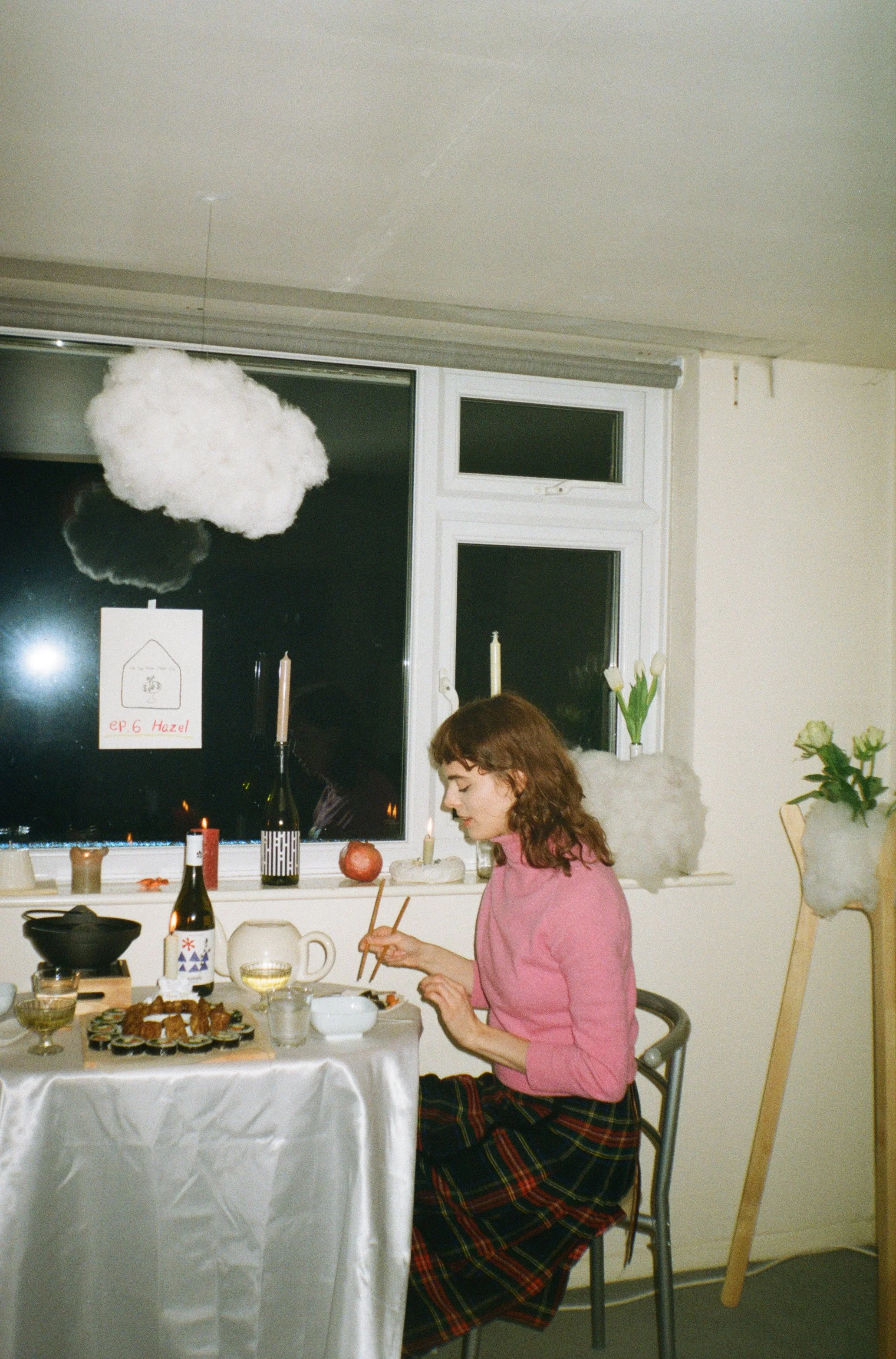
At first, she admitted, she craved fish, and lately she’s even thought about reintroducing it for health reasons. When I asked if supplements helped, she laughed and said she finds it hard to keep up with routines. “I’m so scatty and grubby—I lose things all the time.”
That made me smile. It reminded me of something I’d heard in a video recently—that the traits we see as flaws in ourselves are often the very things others find most endearing. For me, Hazel’s unpolished, human side makes her even more lovable. She doesn’t try to hide her imperfections; she owns them with a kind of effortless honesty that feels genuine.
And truthfully, from my perspective, Hazel is far from disorganised. We work at the same shop, but she also runs her own creative practice as a printmaker, producing the most romantic and heartfelt pieces. I’ve seen her actively take part in illustration events, collaborate with institutions, and showcase her work in exhibitions. She’s incredibly productive and fully present in her artistic world.
That mix of light messiness and quiet dedication feels so true to who she is — it makes her wonderfully, authentically human.

It was December 2024, and as the year drew to a close, our conversation turned to what 2025 might bring. Hazel shared that she and her partner, James, were planning a two-month trip to South America—her first time traveling long-distance. She told me how, during lockdown, she’d become fascinated with Central Asia through books and travel vlogs but ended up choosing South America after some back-and-forth with James.
Coincidentally, I was planning my own summer trip to Kyrgyzstan with Nick. I told Hazel how hearing about Nick’s travels always made me see life differently—how nomadic life teaches you to take only what you need, to live gently alongside nature. “It’s the opposite of how we live in London,” I said. “We just consume and complain—about prices, the weather, everything.” Hazel nodded, laughing, “I know exactly what you mean.”
When she said she was both excited and nervous about the trip, I told her it was a good kind of scary. I shared how I’d felt the same before visiting South Africa for the first time. Because I had never been to a place where safety wasn’t guaranteed and poverty was so visible, everything I saw there was shockingly new. It opened my eyes in ways I couldn’t have expected and made me realize how little I actually knew about the world we live in. That experience changed my perspective—I had thought it was time to “settle down” now that I was thirty, but instead, it reminded me how much more there was to see and understand.
Now, as 2025 comes to an end, it feels surreal to realize we both made those plans happen—Hazel and James in South America, and me in Kyrgyzstan. Different places, but somehow we both carried the same sense of wonder we talked about that night.
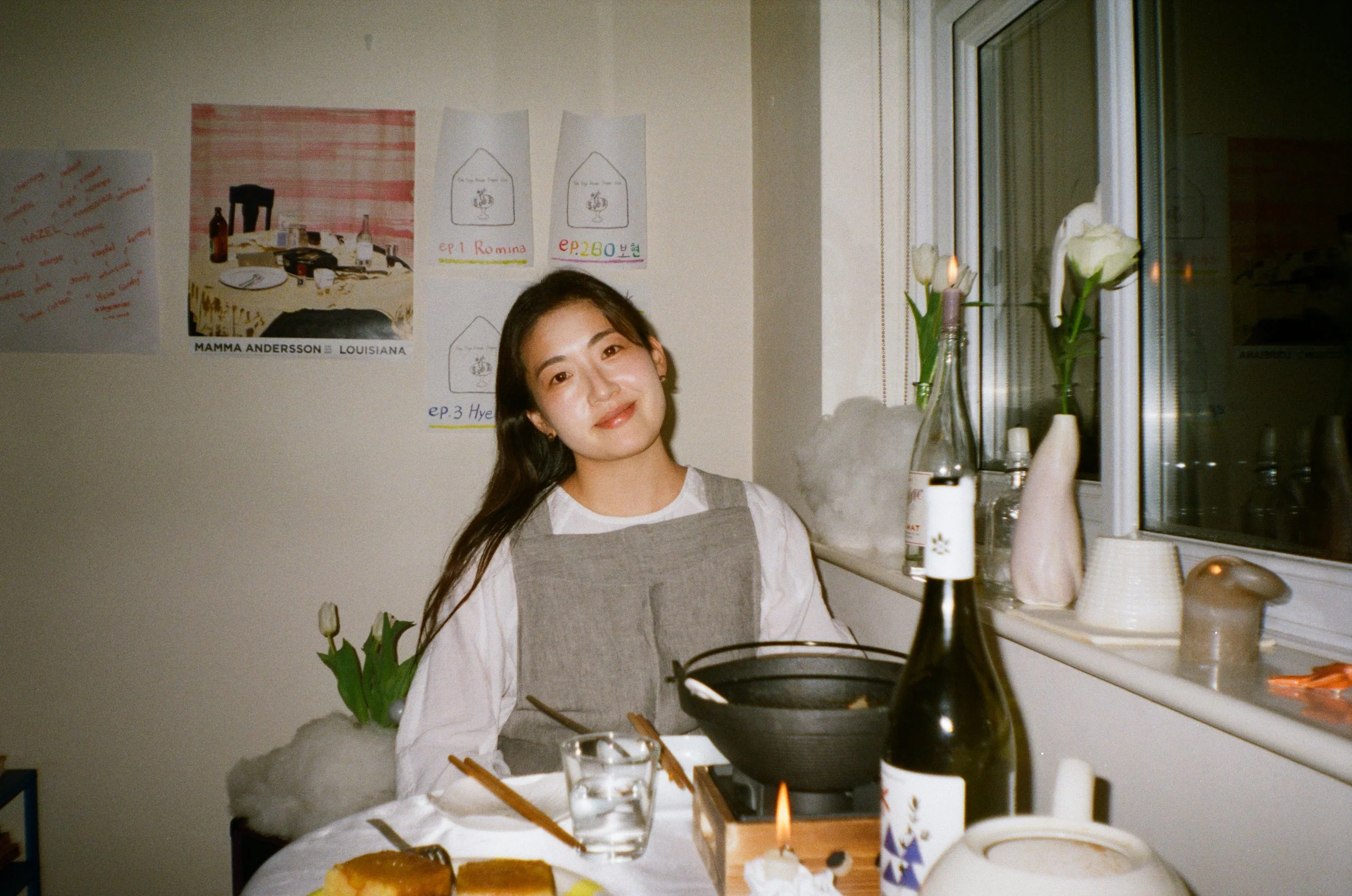
That evening, Hazel told me that when she woke up that morning, she’d had a sudden thought:
“I’m so glad I moved down here,” she said. “Just to feel like there are such lovely and interesting people around. What a treat to go to Sol’s house tonight for dinner.”
Hazel had moved from Scotland to London—a decision that, as it turned out, she and I had both made around the same time, in August 2022. We laughed at the coincidence, realizing that neither of us could’ve imagined, back then, that two years later we’d be sitting here, sharing this meal and talking about how much our lives had changed.
For me, those two years had been full of movement—starting in a student dorm shared with eighteen people, then moving into a flat with strangers, and finally finding a home with Nick. Looking back, it felt like the rhythm of life in London had reshaped me more quickly than I realized.
When Hazel asked what I loved most about living here, I said, “It’s the people.”
London has given me a circle of friends from different backgrounds, something I could never have experienced in the same way in Korea. “Back home,” I told her, “it’s still not as diverse. Things are changing, but it’s nothing like this.”
London is a place full of different ways of living—where people of all ages choose their own paths, without a single version of what success should look like. But that doesn’t mean life here is easy. The pace can be exhausting, and the constant movement sometimes leaves you feeling unanchored. Yet, in the midst of that chaos, there’s comfort in knowing there’s no single right way to live.
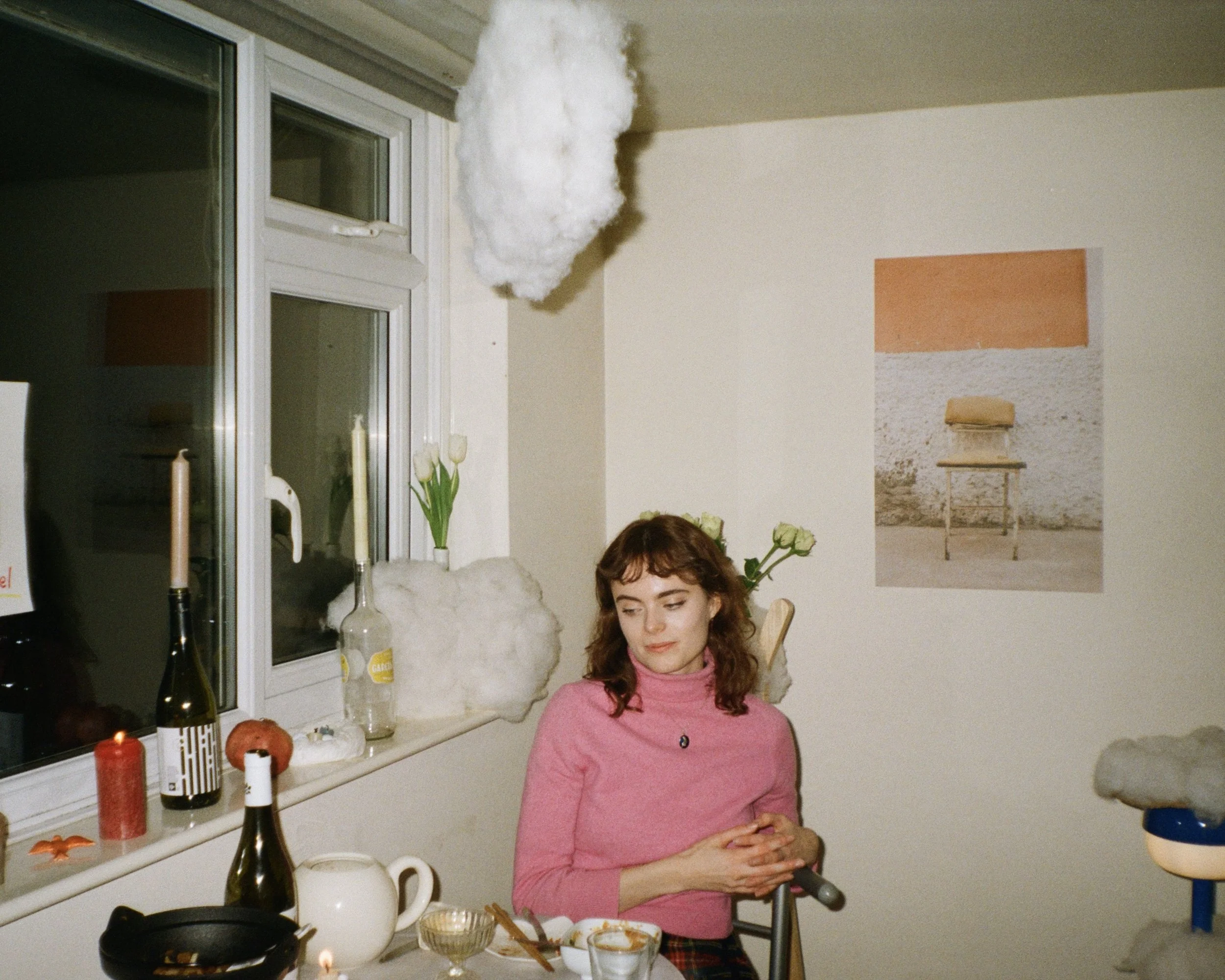
Hazel nodded in agreement. “I think age is a mindset,” she said. “Some people hit life milestones early and it makes them feel older inside—but that’s not the only way.”
She told me about one of her closest friends back in Edinburgh, someone she’s known since primary school. “We’ve grown into completely different people,” she said fondly. “She’s got this structured life that she loves, and I’m down here living mine in a completely different way. I think we both admire each other for that.”
I smiled, thinking how true that felt—not just for them, but for so many of us living here. In London, it feels possible to hold different definitions of happiness side by side. At the shop where Hazel and I work, our colleagues range from people in their twenties to their fifties, each living on their own terms.
“In Korea,” I told Hazel, “it’s harder. Part-time work is seen as something only young people do. Once you’re in your thirties, you’re expected to have a full-time, stable job. Even if you’re content, society might not be. But here, people seem to value the fact that you’re doing something you care about—even if it doesn’t fit the mold.”
I don’t say this to criticize Korean society, but rather out of hope—that someday we might embrace a little more flexibility in how we see people’s lives. Because when there’s room for many ways of living, I think people simply become a little happier.
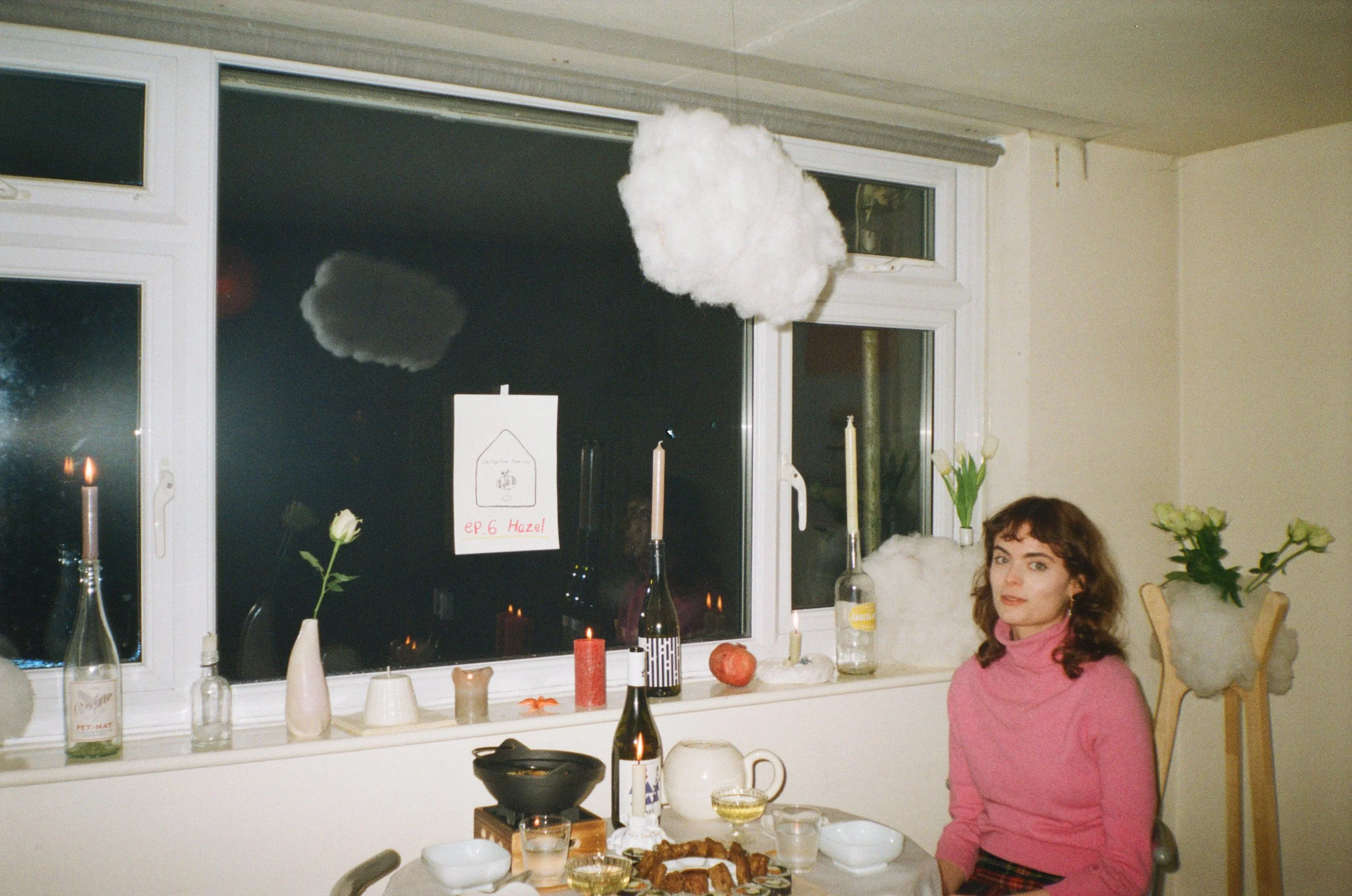
At one point over dinner, we found ourselves talking about our shop — how much we enjoy the people we work with and how fun it would be to host a dinner for the team. Hazel smiled and said she was actually planning a gathering of her own soon: a celebration of Burns Night, a traditional Scottish holiday that honors the poet Robert Burns.
“It’s on the 25th of January,” she explained. “You read his poems and eat Haggis for dinner. I’m going to make a veggie version, though — with oats, lentils, and spices. You have it with tatties and turnips. It’s the Scottish dinner.”
As she described it, I could feel how much of her Scottish identity lives in her — from the words she uses (“wee,” “tatties”) to the warmth that lingers in the way she talks. I’ve never been to Scotland myself, so I asked what it’s really like. Without hesitation, Hazel said, “Scottish hospitality.”
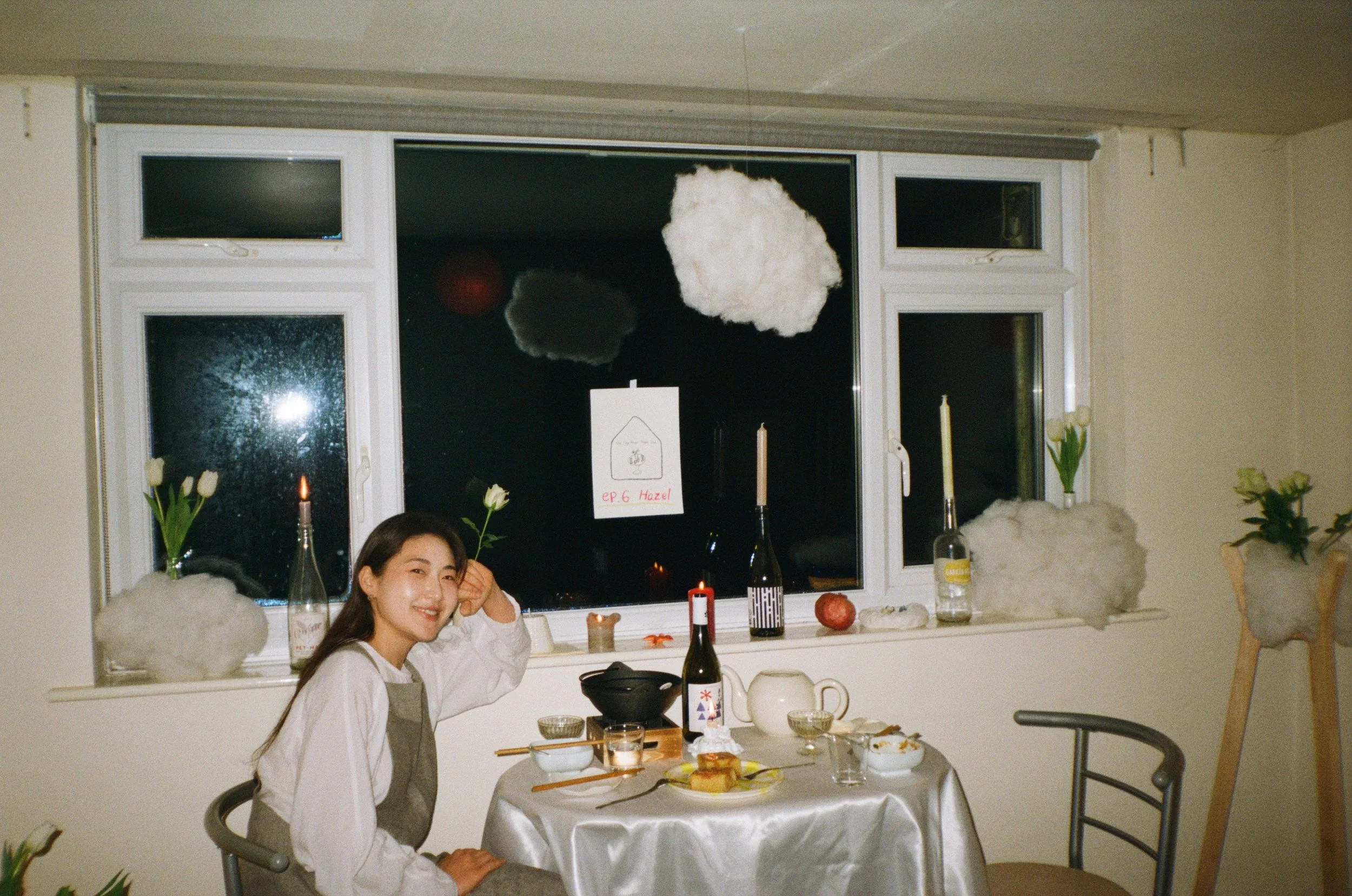
“I think London’s not that friendly,” she admitted.
“Oh?” I said. “That’s interesting — I’ve never found London that unfriendly.”
“Really?” she laughed. “In Scotland, it’s different. If you’re waiting at the bus stop, people make sure you get on first if you’ve been waiting the longest. Everyone queues properly, and you always say ‘thank you’ to the driver. Sometimes an old lady will just start talking to you at the bus stop — it’s normal! But in London, no one really does that.”
I nodded, realizing what she meant. “I guess in London, people build a kind of protective wall around themselves. Maybe it’s because there are so many people here — it feels risky to be open.”
Hazel agreed. “Maybe that’s why. Scotland’s smaller, less stressful. The further north you go, the calmer it gets.”
Listening to her, I could see where Hazel’s own warmth comes from. She’s known for her kind, easy energy — and it suddenly made sense. Her kindness feels like something inherited, a reflection of the place she grew up in.
Both of us were raised in quiet, rural towns, where community meant everything. We talked about how precious those small interactions are — the ones that remind you that people are still paying attention. Living in a city as fast and unrelenting as London, we both miss that sometimes: the simple, unhurried kindness of feeling connected to those around you.
As the night went on, I found myself thinking about how people carry traces of where they come from — not just in their accents or traditions, but in the way they treat others. With Hazel, that warmth feels effortless, like something she never had to learn.
All throughout the evening, she kept saying, “What a treat!” — whenever she tasted something new, or noticed a small detail that delighted her. There was something so genuine in the way she said it, like a child discovering joy over and over again.
It made me realize that gratitude, when spoken aloud, can be a quiet act of love — a way of saying I see this, and I’m thankful for it. Hazel has that gift.


after the dinner•••
Thank you Sol for the most gorgeous evening. It was really special for me to have the opportunity to chat with you one-to-one and to learn many more things about you. And! Thank you for introducing me to my first ever Korean cuisine! The food was so so so so lovely + so different to what I usually eat. As for the decor, I'm so sorry I was late but coming into the room straight from the rush of trains into a beautiful cloud heaven was magical. I really felt like I was floating on another planet. I felt really honored to be invited on this experience with you + thank you so much again for the beautiful, thoughtful evening + lovely chat ❤︎ ❤︎ ❤︎ ❤︎
It was really special.
With love!
Hazel xxxxxxxxx
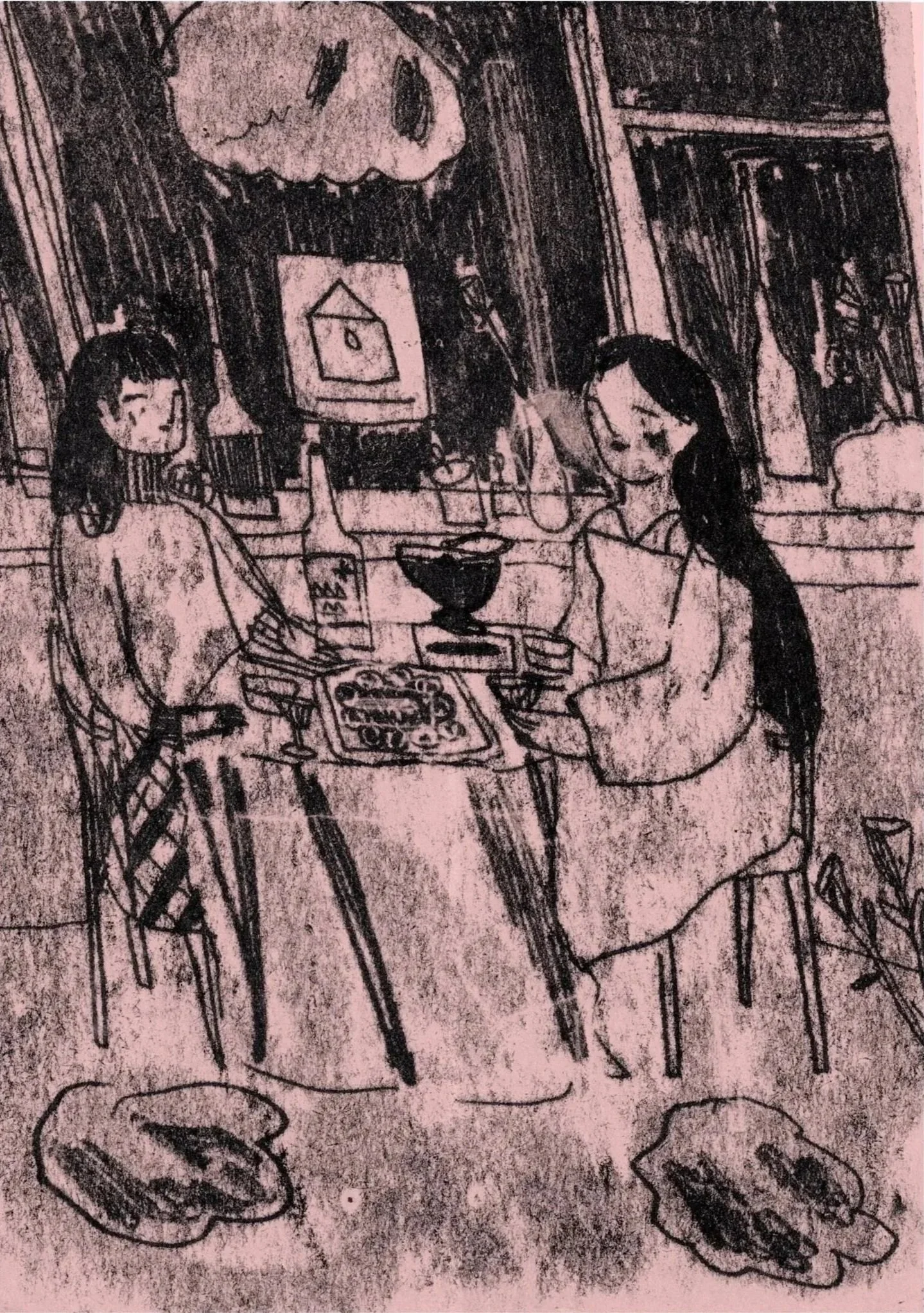
✳︎ A beautiful print made by Hazel to remember the night
•
•
•

Dear Hazel,
After our conversation, I kept thinking about what makes a city truly healthy.
Maybe it’s one that knows how to love — not in the romantic sense, but through patience, care, and small, thoughtful gestures.
In that sense, I can’t help but feel that London, for all its beauty, has grown a little colder.
I came across an interview recently where someone described Cologne as a city of herzlichkeit — “heartfulness.”
A place big enough to feel alive, but not so large that it forgets to be kind.
That thought stayed with me, especially after our talks about how easily warmth can get lost in London’s rush.
Lately, the word love seems to appear everywhere — not because there’s more of it, but because we all feel how much it’s missing.
Two artists I admire, Olivia Dean and Lee Chan-hyuk, both released albums about love — The Art of Loving and EROS.
Olivia sings about love as something to be practiced — through kindness, patience, and empathy.
And in Chan-hyuk’s song〈Endangered Love〉, there’s a line in Korean that sounds like both “the end of love” and “I really love you.”
That small slip between ending and affection says so much — a reminder that love only continues if we keep expressing it.
In a time when kindness can feel endangered, your presence reminds me that it still exists — quietly, persistently.
Thank you, Hazel, for reminding me of the power of gentleness, and for bringing warmth wherever you go.
With love,
Sol